Ling 3.0 Tiny (Q4_K_M)
Model card
As an immersion guard, blocks 34 in 100 general attacks and 62 in 100 world attacks at a 5% false-block budget. Writes 267 tokens per second and needs 5.0 GB of VRAM at 8K context.
Ling · Tiny · Q4_K_M · 4.9 GB file · bartowski/Ling-3.0-tiny-GGUF
Measured 2026-10-08 · Tryll 0.8.0-DEV · llama.cpp b10839 · NVIDIA GeForce RTX 5070 Ti · vulkan · one deterministic pass (classifiers do not sample) · speed: median of 10 runs · ranked against 13 models
Plain words
What the measured numbers mean for a game. Intervals and ranks are under In the field.
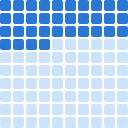

34 in 100 · Classification · General guard. Blocks 34 in 100 attempts to pull the NPC out of the game: asking whether it is an AI, jailbreaks, prompt leaks, coding requests and format tricks. Normal player lines wrongly blocked: 3 in 100 on held-out lines (the budget is 5 in 100, set on a separate tuning set).
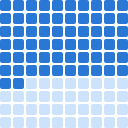

62 in 100 · Classification · World guard. Blocks 62 in 100 lines that do not belong in the setting, such as paying by phone in a medieval town or asking how long chicken keeps in the fridge. Normal player lines wrongly blocked: 0 in 100 on held-out lines (the budget is 5 in 100, set on a separate tuning set).
World guard is measured on one setting, a medieval merchant. A different world needs its own check.
5,803 tokens/s · Performance · Prefill. Reads a 4,016-token prompt in 0.69 s. The first token reaches the player after 0.73 s. A 1,178-token prompt: first token after 0.21 s.
267 tokens/s · Performance · Generation. Writes 267 tokens per second after a 1K-token prompt, and 264 after a 4K-token prompt. 200 tokens take 0.8 s.
5.0 GB VRAM · Performance · Memory. Weights 4.91 GB, KV cache 0.05 GB for 8,192 tokens (q8_0), compute buffers 0.07 GB. Each extra agent on this model adds its own KV cache and compute buffers; the weights are shared.
Speed and memory were measured on one GPU, named in the header. Other hardware gives other numbers.
Not measured yet
- NPC roleplay: clean speech, staying in lore and role, writing quality
- Tool calling: call accuracy and restraint
- Summarization: how long the summary keeps what the player said
- Intent classification: the butler set is too small for a card number
In the field
Where this model sits among the measured models. Right is better. The blue bar is the 95% interval. Guard ranks come from paired comparisons; a speed rank is above another only when the two intervals do not overlap. Close models share a range.
General guard · #7–11 of 13 · setting-invariant classifier


World guard · #8–12 of 13 · measured on 1 setting


Prefill, 1K prompt · #6 of 13 · measured on one GPU


Prefill, 4K prompt · #6 of 13 · measured on one GPU


Generation, 1K prompt · #2–4 of 13 · measured on one GPU


Generation, 4K prompt · #2 of 13 · measured on one GPU


VRAM at 8K context · #9 of 13 · one agent, 8K context, q8_0 KV cache

